
Best Welding Trade School Programs In 2026: Top 14
Updated: Feb 23
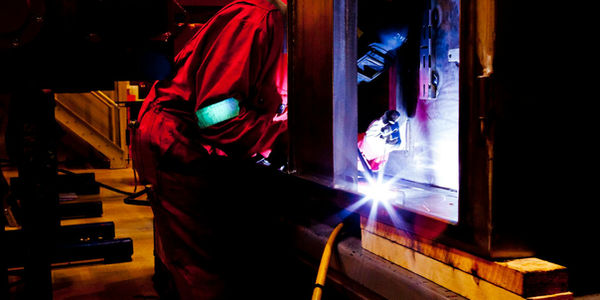
A welding trade school is a specialized educational institution designed to teach the science and art of fusing materials, most commonly metals. These programs are for anyone, from high school graduates to career switchers, looking for a direct path into a skilled trade without the time and expense of a traditional four year degree. Unlike a university, a welding trade school focuses on providing the practical, hands on experience and theoretical knowledge needed to enter the workforce quickly and competently. If you are a hands on learner aiming for a career with strong demand and solid earning potential, a welding program could be your perfect fit.
The Welder’s World: Career Paths and Work Environments
Welders are the backbone of countless industries, working in environments that are as diverse as the trade itself. You might find yourself hundreds of feet in the air on a skyscraper construction site, on the factory floor of an automotive plant, or even deep underwater repairing oil rigs. The U.S. Bureau of Labor Statistics projects about 42,500 openings for welders, cutters, solderers, and brazers each year, on average, over the decade.
Common work environments include:
Manufacturing and Fabrication: Building everything from cars and airplanes to industrial machinery in a controlled shop environment.
Construction: Working on new buildings, bridges, and infrastructure projects, often outdoors and at various heights.
Maintenance and Repair: Working in facilities like power plants, factories, or large residential complexes (as an apartment maintenance technician, for example) to repair equipment and structures.
Shipbuilding: Constructing and repairing ships and submarines in shipyards.
Motorsports: Fabricating and repairing high performance race cars.
This career demands physical stamina, attention to detail, and a commitment to safety, but it rewards skilled professionals with a dynamic and essential role in the economy.
Forging Your Path: Welder Training and Education
The journey to becoming a welder typically begins at a vocational or welding trade school. These programs can range from a few months for a basic certificate to two years for an associate’s degree. Coursework combines classroom theory with extensive hands on practice in welding booths.
You’ll study topics like:
Blueprint Reading: Understanding the technical drawings that guide a project.
Welding Symbols: Learning the standardized language of welding instructions.
Shop Mathematics: Applying measurements and calculations to ensure precision.
Metallurgy: Understanding the properties of different metals and how they react to heat.
Oxyfuel Cutting and Brazing: Learning to use oxygen and a fuel gas (like acetylene) to cut, shape, and join metals. These thermal cutting skills are fundamental for fabrication and repair work.
Safety Procedures: Mastering the essential protocols for a safe working environment.
While traditional schools are an excellent path, you can start building foundational knowledge in areas like safety right from your phone. Platforms like SkillCat offer accredited training in related trades, helping you build a solid base of job site knowledge even before you strike your first arc. Want a head start on MIG vs. TIG, welding symbols, and metallurgy? Explore our Welding Fundamentals guides.
The Importance of Hands On Shop Time
Theoretical knowledge is crucial, but welding is a skill honed through practice. A quality welding trade school will dedicate a significant portion of its curriculum to lab or shop time. This is where you move from textbook diagrams to laying down actual welds. Repetition is key to developing muscle memory and the fine motor skills required to control the weld puddle. Students practice various welding processes like Shielded Metal Arc Welding (SMAW), Gas Metal Arc Welding (GMAW or MIG), and Gas Tungsten Arc Welding (GTAW or TIG) on different types of metal joints. This hands on experience is what employers look for and is the most critical component of your training.
Certifications: The Key to Unlocking Opportunities
While a diploma from a welding trade school is a great start, professional certifications are what truly validate your skills to employers. The American Welding Society (AWS) is the primary certifying body in the United States, and earning an AWS certification is a significant milestone. The most common entry level certification is the Certified Welder (CW) credential.
There are numerous specialized certifications for different processes, materials, and industries, such as aerospace or pipeline welding. These certifications prove that a welder has passed a rigorous test according to a specific code or standard, demonstrating their ability to produce sound welds. Many employers require these credentials for employment, and they often lead to higher pay and more advanced career opportunities.
Beyond the Classroom: Apprenticeships and Work Based Learning
While a trade school diploma provides a powerful start, another highly effective path into the trades is through an apprenticeship. A welding apprenticeship is a formal program that combines paid, on the job training under the supervision of experienced journey workers with related classroom instruction.
Benefits of an apprenticeship include:
Earn While You Learn: Get a paycheck from day one instead of taking on debt.
Mentorship: Gain real world skills and knowledge directly from seasoned professionals.
Guaranteed Job: Your training is your job, often with a clear path to full time employment upon completion.
Many schools also facilitate internships and work based learning opportunities, allowing you to gain practical experience and network with local employers while still completing your studies. These programs are invaluable for building your resume and can often lead directly to job offers after graduation.
Earning Potential and Career Advancement
Welding can be a lucrative career. The median annual wage for welders, cutters, solderers, and brazers was $50,440 in May 2023. However, this figure can vary widely based on skill level, certifications, industry, and location. Highly specialized welders, such as industrial pipe welders or underwater welders, can earn well over $100,000 per year.
Career progression can lead to roles like:
Welding Inspector
Welding Supervisor or Foreman
Welding Engineer
Small Business Owner
If “welding inspector” is on your radar, dive into our Quality Control articles to see what inspectors look for in code quality welds.
Planning to go the small business route? Our Estimating & Writing Repair Work guides can help you price jobs and write scopes clearly.
Continuous learning and adding new certifications are the keys to advancing in this trade. Even learning complementary skills, like the HVAC basics and EPA certification content taught through SkillCat, can make you a more versatile and valuable technician on any job site.
How to Choose the Right Welding Trade School
Selecting the best welding trade school for you is a personal decision based on your goals, budget, and learning style. There is no single number one school for everyone.
Consider these factors when evaluating programs:
Accreditation: Ensure the school is accredited by a recognized agency.
Instructor Experience: Look for instructors with real world industry experience.
Hands On Training: Ask about the ratio of shop time to classroom time. More shop time is generally better.
Career Services: A good school will offer job placement assistance, resume help, and connections with local employers.
Program Cost and Length: Compare tuition and the time commitment required to find a program that fits your life.
Certifications Offered: Check if the curriculum prepares you for specific, in demand certifications like those from the AWS.
Top 14 Welding Trade School Programs in 2025
Now that you have a better understanding of what to look for in a welding program, let’s dive into our top picks for 2025. The following list features a diverse range of institutions, from dedicated welding schools to community colleges, all recognized for their exceptional training and industry connections. These programs have been selected based on their comprehensive curriculum, hands on training opportunities, and high graduate success rates.
If you’re seeking a fast, hands on path into a welding career with flexible schedules and national employer reach, Tulsa Welding School delivers. The Professional Welder track moves you quickly from fundamentals to advanced plate and pipe, blending booth time with OcuWeld VR practice so you can refine angles, travel speed, and bead placement between lab sessions.

Locations/Campuses: Tulsa, OK; Jacksonville, FL; Houston, TX; Irving, TX
Credentials: Diploma, Associate of Occupational Studies (AOS)
Length: 7 months (Diploma) to 14 months (AOS); day, evening & weekend options
Tuition/Cost: Not published
Delivery: In person labs with hybrid theory and OcuWeld VR practice
Accreditation/Approvals: ACCSC
Website: www.tws.edu
Bold, shop first training covers SMAW, GMAW/MIG, FCAW, and GTAW/TIG, layered with safety, blueprint reading, and thermal cutting. Individual booths keep the focus on repetition and technique while the VR system extends practice beyond shop hours, which is ideal for working learners and veterans.
Career outcomes are front and center: you’ll practice bend tests, prepare for employer weld tests and AWS certifications, and work with Career Services on resumes, interviews, and job leads through national hiring partners.
A specialized welding school with a legacy in industry training, Hobart is a strong fit for career switchers and veterans who want concentrated booth time and clear routes to certification. Choose an intensive 24 week core or a 40 week program with targeted specializations.
Locations/Campuses: Troy, OH
Credentials: Postsecondary Certificates; on site AWS Certified Welder testing
Length: 24 weeks (840 hours) or 40 weeks (1,400 hours)
Tuition/Cost: $14,200 to $23,400
Delivery: 100% in person, shop based
Accreditation/Approvals: ACCSC; AWS Accredited Test Facility
Website: welding.org
From SMAW, GMAW/MIG, GTAW/TIG, and FCAW to oxyfuel cutting, blueprint reading, and safety, you’ll master core processes in a purpose built facility stocked with modern equipment. The 40 week Pathways track lets you specialize in pipe welding or fabrication after the 24 week foundation.
Hobart preps you for on site AWS Certified Welder testing and supports the job hunt with robust placement services. Stack your learning with multiple start dates and certificate options that fit your timeline.
Run by one of the most respected names in welding, this Cleveland based school emphasizes modern equipment, world class labs, and focused instruction. It’s a strong pick for career changers or working pros seeking concentrated skill building and the credibility of a manufacturer backed education.

Locations/Campuses: Cleveland, OH
Credentials: Certificate of Completion (IACET CEUs)
Length: 16 weeks (480 hours); short courses available
Tuition/Cost: ~$9,965 (Comprehensive Program)
Delivery: In person day classes; some evening/weekend options
Accreditation/Approvals: Ohio State Board of Career Colleges and Schools; AWS Accredited Testing Facility
Website: classes.lincolnelectric.com
You’ll spend 400+ hours in the booth across SMAW, GMAW/MIG, GTAW/TIG, and FCAW, plus oxyfuel/plasma cutting, safety, and blueprint reading. Short, skills targeted courses and flexible schedules make it easier to upskill around work.
Graduates are ready for qualification tests delivered on site, including AWS D1.1, ASME Section IX, and API 1104. Multiple start dates help you time enrollment to your goals.
Built for speed to job training, Cal Trade focuses on intensive shop experience with small cohorts and personalized coaching. It’s a pragmatic choice for beginners, veterans, and upskillers who want concentrated practice and on site certifications.

Locations/Campuses: Modesto, CA
Credentials: Certificate of Completion; on site welding certifications
Length: 9 to 18 weeks (270 to 540 clock hours); daytime schedule
Tuition/Cost: $7,895 to $13,495
Delivery: In person, shop based
Accreditation/Approvals: Approved by California BPPE
Website: caltradeweldingschoolofmodesto.com
Training is relentlessly hands on: SMAW, GMAW/MIG, GTAW/TIG, and FCAW plus oxyfuel/plasma cutting, blueprint reading, and safety, taught in a 4,000 sq. ft. shop with individual booths and modern machines. You’ll move quickly from fillet welds to more complex positions with ample repetition.
Programs include prep for AWS D1.1, ASME, and API code tests, with required on site certifications. Graduates benefit from lifetime job placement assistance and local employer connections.
AAI’s Combination Welding diploma is built for momentum: fast, focused, and grounded in real shop practice that translates directly to entry level jobs across Phoenix and beyond.
Locations/Campuses: Glendale, AZ (Phoenix metro)
Credentials: Diploma in Combination Welding
Length: 10 months (day/evening options available)
Tuition/Cost: ~$21,228 to $22,075 (confirm with school)
Delivery: In person shop and classroom
Accreditation/Approvals: ACCSC
Website: aai.edu/programs/combination-welding
You’ll dive into SMAW, GMAW/MIG, GTAW/TIG, and FCAW, plus oxy fuel and plasma cutting. Practical fit up, fabrication, and weld repair are integrated with blueprint reading and symbol fluency so you can take drawings to finished parts with confidence.
Graduates are prepared for NCCER and AWS certifications. AAI’s Career Services assists with resumes, interviews, and employer connections to help you step into the workforce quickly.
Albany Tech aligns hands on training with stackable credentials and low in state tuition, an efficient route for career starters and upskillers who want shop time that leads to real credentials.

Locations/Campuses: Albany, GA
Credentials: Diploma (Welding and Joining Technology); multiple stackable TCCs
Length: 54 credits (Diploma); day/evening options
Tuition/Cost: ~$1,682/semester (in state, pre aid); HOPE Career Grant eligible
Delivery: In person shop and lab
Accreditation/Approvals: SACSCOC
Website: albanytech.edu
Start with safety, blueprint reading, and oxyfuel cutting, then progress into SMAW, GMAW/MIG, and GTAW/TIG in multiple positions. Metallurgy basics, weld symbols, and equipment setup round out the skill set, with extensive booth practice to build consistency.
Expect prep for employer qualification and AWS certifications, plus job support through Career Services. Stack TCCs into the diploma and keep building; credits can transfer toward an AAS.
For learners who want maximum access to labs and flexible schedules, ACTC’s around the clock training at the Technology Drive Campus is tough to beat, especially if pipe, flux cored, or aluminum are on your radar.

Locations/Campuses: Ashland, KY (Technology Drive Campus)
Credentials: Certificate, Combination Welder Diploma, AAS Option; AWS SENSE Level I
Length: 48 to 55 credits (Diploma)
Tuition/Cost: ~$9,744 to $11,165 (resident diploma tuition)
Delivery: In person with day, evening, and midnight shifts
Accreditation/Approvals: SACSCOC
Website: ashland.kctcs.edu
Hands on training spans SMAW, GMAW/MIG, and GTAW/TIG, plus cutting processes, safety, and blueprint reading. Electives allow targeted practice in pipe and flux cored, with ample booth time to refine technique.
Courses embed AWS performance qualification practice and a path to AWS SENSE Level I. Stack certificates into the Combination Welder Diploma, then apply credits toward an associate degree.
With multi campus access and a shop every day approach, CLTCC is built for hands on learners who want to stack credentials while steadily leveling up from plate to 6G pipe.
Locations/Campuses: Alexandria, Ferriday, Winnfield, Jena, and Cottonport, LA
Credentials: Technical Diploma (TD) with stackable Certificate of Technical Studies (CTS)
Length: 1,530 to 1,800 clock hours; full time day and part time evening options
Tuition/Cost: ~$10,300 to $10,600
Delivery: In person shop and classroom
Accreditation/Approvals: SACSCOC
Website: cltcc.edu
After safety, blueprint reading, and metallurgy fundamentals, you’ll work across SMAW, GMAW/MIG, GTAW/TIG, and FCAW, plus oxyfuel systems and cutting. Labs at five campuses offer consistent booth time and a clear path from basics to advanced fabrication and fit up.
Expect focused prep for AWS Certified Welder qualifications, stackable semester based credentials, and job placement support through career services.
SGTC’s diploma blends affordable tuition with high contact shop training on two campuses, ideal for career starters or working welders adding processes and positions to their toolkit.
Locations/Campuses: Americus, Cordele
Credentials: Diploma, Technical Certificates of Credit (TCCs)
Length: 54 credits (Diploma)
Tuition/Cost: $107/credit (in state)
Delivery: In person labs with day/evening options
Accreditation/Approvals: SACSCOC
Website: South Georgia Technical College
Training emphasizes SMAW in all positions along with GMAW/MIG, GTAW/TIG, and FCAW, plus oxyfuel/plasma cutting. Blueprint reading, metallurgy basics, safety, and weld symbols are taught alongside consistent booth practice for job ready proficiency.
Students prepare for employer qualification tests (including bend tests and 2G/5G/6G pipe) and can leverage career services and industry partners for placement.
UAA offers a university based route into welding with the practicality of shop first training. Multiple campuses and stackable credentials make it a flexible option for Alaskans aiming for certification today and degrees tomorrow.

Locations/Campuses: Anchorage, Kenai, Kodiak campuses
Credentials: Occupational Endorsement & Undergraduate Certificates
Length: 19 to 32 credits (approx. 1 year)
Tuition/Cost: Resident: $4.6k to $7.7k; Nonresident: $16k to $27k
Delivery: In person
Accreditation/Approvals: NWCCU; AWS Accredited Test Facility
Website: uaa.alaska.edu
Programs cover SMAW, GMAW/MIG, and FCAW with thermal cutting, blueprint reading, and safety. The Advanced OEC adds GTAW/TIG and complex pipe positions (2G, 5G, 6G) aligned to API standards for those pushing into higher skill roles.
As an AWS Accredited Testing Facility, UAA offers on site certification, including AWS D1.1 and API 1104. Credits stack toward an AAS or even a BS for long term advancement.
NEIT bridges the gap between shop floor capability and engineering insight, great for hands on learners who also want exposure to robotics, CADD, and quality testing as they build process mastery.

Locations/Campuses: Warwick, RI
Credentials: Associate in Science (AS) with AWS SENSE Level I
Length: 18 months (103 to 105 credits)
Tuition/Cost: Not published
Delivery: In person with day/evening options
Accreditation/Approvals: NECHE
Website: NEIT Welding Engineering Technology
Core training spans SMAW, GMAW/MIG, GTAW/TIG, and FCAW, plus oxy acetylene and air carbon arc cutting, blueprint reading, OSHA safety, and metallurgy. Labs add CADD with weldments, nondestructive testing, precision measurement, and exposure to robotic welding for advanced technical roles.
You’ll prepare for employer tests with embedded credentials like AWS SENSE Level I and OSHA 10. Multiple starts and stackable credits keep pathways flexible as your goals evolve.
Ferris State’s A.A.S. offers deep shop immersion inside a university setting, perfect for learners who want immediate welding skills plus a seamless pathway to a bachelor’s in Welding Engineering Technology.

Locations/Campuses: Big Rapids, Michigan
Credentials: Associate of Applied Science (A.A.S.)
Length: 64 to 65 credits (four semesters)
Tuition/Cost: ~$515 per credit (lower division, in state)
Delivery: In person shop and classroom
Accreditation/Approvals: HLC; the companion B.S. is ABET accredited
Website: www.ferris.edu
You’ll build capability across SMAW, GMAW, GTAW, and FCAW with blueprint reading, metallurgy, fabrication, and quality testing. Advanced spaces include CNC plasma tables, robotic GMAW cells, laser welding, and a quality lab featuring digital x ray and a 120,000 lb tensile tester.
Coursework readies you for AWS Certified Welder qualifications with extensive bend and NDE practice. The A.A.S. articulates directly to the ABET accredited B.S., opening doors to supervisory and engineering roles.
13. The Crucible
An arts forward makers’ hub, The Crucible is perfect for curious beginners, artists, and fabricators who want to explore welding safely and creatively without committing to a full trade program.

Locations/Campuses: West Oakland, CA
Credentials: Noncredit community workshops; no degree/diploma
Length: 3 hour tasters to 15 hour classes; day/evening options
Tuition/Cost: ~$200 to $850 per class
Delivery: In person shop classes; nights/weekends
Accreditation/Approvals: Nonprofit arts school; no trade accreditation
Website: thecrucible.org
Classes emphasize shop safety, machine setup, basic metallurgy, and plasma cutting as learners create small projects. PPE is provided, making it easy to try welding, build confidence, and decide on next steps.
While not designed for AWS certification or job placement, courses build a practical foundation. Members can book extra lab time to practice and develop portfolio worthy work.
14. Humanmade
Humanmade offers a makerspace pathway into welding, ideal for hardware startups, tinkerers, and career explorers who want quick, practical training and ongoing access to modern tools.
Locations/Campuses: San Francisco, CA
Credentials: In shop authorization (non credit)
Length: 3 hour course (evening/weekend options)
Tuition/Cost: $180 course fee + monthly membership
Delivery: In person shop training
Accreditation/Approvals: 501©(3) nonprofit
Website: humanmade.org
In a 13,000 sq ft makerspace, the intro course covers MIG and TIG setup, safety, and core techniques; the recommended Metal Shop Fundamentals adds saws, grinders, and brakes for complete fabrication basics. It’s a supportive environment to prototype, practice, and iterate.
Completion grants internal authorization to use welding stations for personal projects and portfolio building. It’s not AWS/NCCER prep, but it offers valuable, hands on experience for self directed makers.
Admissions, Costs, and Financial Aid
Admission requirements for a welding trade school are typically straightforward, usually requiring a high school diploma or GED. Some schools may have additional placement tests for math and reading.
The cost of welding school can range from a few thousand dollars for a short term certificate program to over $30,000 for a more comprehensive associate’s degree. Don’t let the sticker price deter you. Many students are eligible for financial aid, including federal grants (like the Pell Grant), student loans, and scholarships offered by the schools themselves or industry organizations like the American Welding Society. Be sure to fill out the Free Application for Federal Student Aid (FAFSA) to see what you qualify for.
Application Deadlines and Start Dates
Unlike traditional four year universities with rigid fall application deadlines, many welding trade schools offer more flexibility. It is common to find programs with multiple start dates throughout the year (for example, every spring, summer, and fall) or even rolling admissions, which means you can apply anytime. Always check the specific application date for each school you are interested in, but do not be discouraged if you miss a traditional deadline, as another start date may be just a few months away.
Gearing Up: What You Need to Get Started
Before you step into the welding booth, you’ll need the proper Personal Protective Equipment (PPE). Safety is the top priority in welding.
Your essential gear will include:
Welding Helmet: An auto darkening helmet is highly recommended to protect your eyes from the bright arc.
Safety Glasses: Worn under your helmet for added protection.
Welding Jacket: Made of flame resistant material to protect you from sparks and spatter.
Gloves: Heavy duty, flame resistant gloves are essential for handling hot metal and equipment.
Steel Toed Boots: To protect your feet from falling objects and sparks.
Off the clock, rep the trades with our We Build the World T-shirt.
Beyond gear, a good attitude, a willingness to learn, and a steady hand are your greatest assets.
Conclusion
Enrolling in a welding trade school is a direct investment in a challenging and rewarding career. By combining classroom knowledge with extensive hands on practice, you can gain the skills needed to enter a high demand field with excellent long term prospects. Focus on finding an accredited program that offers ample shop time and prepares you for industry recognized certifications. This path empowers you to build a secure and prosperous future, one weld at a time.
Ready to start your journey in the skilled trades? Explore foundational courses and see how accessible learning can be with SkillCat.
Frequently Asked Questions
What does a welding trade school teach?
A welding trade school teaches both the theory and practical application of welding. This includes safety protocols, blueprint reading, different welding processes like MIG and TIG, metallurgy, and hands on practice to perfect your technique and prepare for certification exams.
How long does it take to finish a welding trade school program?
Program lengths vary significantly. You can find basic certificate programs that last just a few months, while more in depth diploma or associate’s degree programs can take one to two years to complete.
Is welding a good career choice?
Yes, welding is an excellent career choice for individuals who enjoy hands on work. It is an in demand trade with a strong job outlook and offers the potential for high earnings, especially for skilled and certified professionals in specialized industries.
How much does welding trade school cost?
The cost can range from approximately $5,000 for a basic certificate to over $30,000 for an associate’s degree. However, financial aid options like grants, scholarships, and loans are widely available to help students manage the cost.
Do I need to be certified to be a welder?
While not always legally required, most employers demand certification from a recognized body like the American Welding Society (AWS). Certification proves your skills have been tested and meet industry standards, leading to better job opportunities and higher pay.
Can you learn welding online?
While you cannot learn the hands on part of welding online, you can learn the essential theoretical knowledge. Online platforms can be great for studying concepts like blueprint reading, safety procedures, and welding symbols, supplementing the practical training you receive at a welding trade school.


