HVACR Education 2026: EPA 608 Certification Essentials
Updated: Sep 14
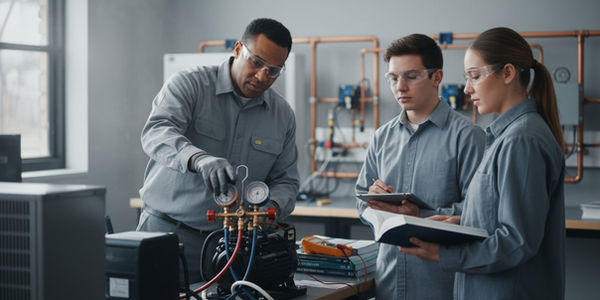
If you’re planning a career in heating, ventilation, air conditioning, or refrigeration (HVACR), you’ll quickly learn that certain credentials are not just nice to have, they’re legally required. The most important of these is the EPA Section 608 Technician Certification. This certification is a fundamental piece of any technician’s hvacr education and the key that unlocks your ability to legally work with refrigerants.
Let’s break down everything you need to know about this critical certification, from what it is and why you need it, to how you can earn it and advance your career. If you’re brand new to the trade, start with our HVAC basics course for beginners.
What is Section 608 Technician Certification?
The Section 608 Technician Certification is a mandatory, nationwide credential required by the U.S. Environmental Protection Agency (EPA) under the Clean Air Act. In simple terms, if you plan to maintain, service, repair, or dispose of equipment that could release refrigerants into the atmosphere, you must be certified. This applies to almost all stationary air conditioning and refrigeration systems, from residential AC units to commercial freezers.
The whole point of this certification requirement is to protect the environment. Refrigerants, especially older types like CFCs and HCFCs, contain chlorine that depletes the Earth’s ozone layer. While newer HFC refrigerants don’t harm the ozone, they are potent greenhouse gases. The EPA’s rules ensure that only trained and tested individuals handle these substances, minimizing accidental releases and promoting proper recovery and recycling practices.
The Certification Requirement Explained
The law is very clear. A “technician” is defined as anyone who performs activities like attaching gauges and hoses to a system, adding or removing refrigerant, or doing anything else that opens the refrigerant circuit. So, if your job involves these tasks, you are legally required to hold an EPA 608 certification.
Here are a few key facts about the requirement:
It’s Federally Mandated: This isn’t a state or local rule. It’s a federal law with serious penalties. Venting refrigerant or working without certification can lead to fines starting at $37,500 per day, per violation.
It Covers Most Refrigerants: The rules originally focused on ozone depleting substances (CFCs and HCFCs). As of 2018, they were updated to include HFCs as well.
It Doesn’t Expire: Once you earn your Section 608 certification, it’s good for life under current EPA regulations.
Apprentices are Supervised: An uncertified apprentice can work on systems, but only if they are closely and continuously supervised by a certified technician who is on site.
It’s Different from Automotive AC: Working on motor vehicle air conditioning (MVAC) requires a separate Section 609 certification.
This certification has become the industry standard and a non negotiable ticket to entry. Employers will not hire technicians who lack it, and wholesalers will not sell regulated refrigerants to anyone who cannot present their certification card. It is a foundational component of modern hvacr education.
Finding a Technician Certification Program
So, how do you get certified? The EPA itself doesn’t actually administer the exams. Instead, it approves various outside organizations to proctor the test and issue certifications. These are known as Technician Certification Programs.
These programs can be trade schools, community colleges, unions, or private training companies. The EPA maintains an official list of approved programs, so you can always verify that an organization is legitimate. This is where your formal hvacr education on refrigerants begins.
Important Considerations When Choosing a Program
When you’re ready to get certified, you’ll need to pick a program that works for you. Here are a few important considerations to keep in mind:
Testing Format: Do you want to test in person or online? Many programs have physical testing centers, but the rise of remote learning has made online testing incredibly popular. Platforms like SkillCat offer a fully online, remotely proctored exam, allowing you to get certified from home.
Public vs. Private: Most programs are open to the public. However, a few on the EPA’s list are marked as internal, meaning they are only for employees of a specific company.
Language Options: Some programs offer the exam in multiple languages, such as Spanish, which can be a huge help for many technicians.
Training Materials: The EPA approves the testing organization, not their study guides. While many programs offer prep courses, you are free to study from any resource you trust before taking the exam. A quality hvacr education provider will offer comprehensive study materials.
Record Keeping: Choose a reputable program that maintains good records. If you ever lose your card, a responsive organization makes getting a replacement much easier.
Breaking Down the EPA 608 Exam Test Topics
The EPA 608 exam is a multiple choice test broken into four sections: a mandatory Core section and three equipment specific sections (Type I, Type II, and Type III). To earn a Universal Certification, which allows you to work on any type of stationary equipment, you must pass all four sections. A passing score is typically 70% on each section.
The Core Section: What Every Tech Needs to Know
Every single person seeking certification must pass the Core section. This is the foundation of your refrigerant handling hvacr education. The core questions cover general knowledge that applies to all technicians.
Key topics include:
Environmental Impact: Understanding ozone depletion, the role of chlorine, and the global warming potential of different refrigerants. You’ll need to know which refrigerants are CFCs, HCFCs, and HFCs.
Regulations: Knowledge of the Clean Air Act, the Montreal Protocol, refrigerant phase out dates, and the absolute prohibition on venting.
The Three R’s: Knowing the difference between Recover, Recycle, and Reclaim. For instance, recovered refrigerant can only be returned to the same system or another system owned by the same person unless it is sent to an EPA certified reclaimer to be purified to virgin specifications.
Safety and Handling: Proper use of personal protective equipment (PPE), the dangers of oxygen deprivation, and safe handling of refrigerant cylinders (like the 80% fill limit). Recovery cylinders, for example, are painted gray with a yellow top and must not be overfilled.
Type I Certification Questions: Small Appliances
A Type I certification allows a technician to work on small appliances. The EPA defines a “small appliance” as a pre charged, factory sealed unit containing five pounds or less of refrigerant. Think household refrigerators, window AC units, and dehumidifiers.
Type I questions focus on:
Recovery Requirements: Knowing the required refrigerant recovery levels for small appliances, which can depend on whether the compressor is working and the age of the recovery equipment.
Recovery Techniques: Methods for recovering refrigerant from systems with an inoperative compressor, such as using heat or tapping the compressor.
Access Valves: Understanding that solderless piercing valves (line taps) are often used but should be removed after service to prevent leaks.
Type II Certification Questions: High Pressure Systems
This is the most common certification for HVAC technicians, as it covers high pressure systems. This includes most residential and commercial equipment like split system ACs, heat pumps, and supermarket refrigeration.
Type II questions are more technical and cover:
Leak Detection and Repair: Technicians must know the EPA’s mandatory leak repair thresholds for systems containing more than 50 pounds of refrigerant. For example, commercial refrigeration systems must be repaired if they are leaking more than 20% of their charge per year.
Evacuation Levels: Understanding the specific vacuum levels that must be reached when opening or disposing of high pressure systems.
Service Practices: Best practices for speeding up refrigerant recovery (like removing liquid first), and safety protocols for machinery rooms, such as the need for an oxygen deprivation sensor under ASHRAE Standard 15.
Type III Certification Questions: Low Pressure Systems
Type III certification is for technicians who work on low pressure appliances, which are primarily large centrifugal and absorption chillers used in big commercial buildings. These systems operate in a vacuum, which presents unique service challenges.
Type III questions will test your knowledge of:
Leak Testing: Because these systems operate below atmospheric pressure, a leak can pull air and moisture into the system. The preferred leak test method involves circulating warm water through the chiller to raise the refrigerant pressure slightly above zero.
Recovery and Charging: Special procedures are required to avoid freezing water in the chiller tubes during evacuation. When recharging, vapor must be introduced first to raise the pressure before adding liquid refrigerant.
Purge Units: Understanding the function of a purge unit, which is designed to remove non condensable gases like air that have leaked into the system.
Preparing with an EPA 608 Practice Test
Given the amount of detail, numbers, and dates on the exam, taking an EPA 608 practice test is one of the best ways to prepare. A good practice test simulates the real exam, helping you identify weak spots, get comfortable with the question format, and build confidence.
Comprehensive hvacr education platforms often include extensive practice materials. For example, the SkillCat training app includes hundreds of practice questions covering all four exam sections. Their training program boasts a 98% pass rate, highlighting how effective solid preparation can be. Using an EPA 608 practice test moves you from passively reading material to actively recalling information, which is a proven way to improve memory and test performance. If you learn best by doing, check out this HVAC simulator guide.
After the Exam: Managing Your Certification
Once you pass the exam, you’re certified for life. But there are a couple of practical things to keep in mind as you move forward in your career.
How to Replace a Lost Certification Card
Losing your certification card can be a hassle, especially when you need it to buy refrigerant. Fortunately, the process to replace a lost certification card is straightforward.
Remember, the EPA does not issue the cards, your certifying organization does. If you need to look up or verify your certification number, use this EPA number search guide.
Contact Your Original Provider: The first step is to contact the organization that administered your test. They are required to keep records of everyone they certify and can issue you a replacement, usually for a small fee.
What if the Provider is Closed?: If your original testing organization is no longer in business, the EPA has a solution. If you have any proof of your certification (like a photo of the old card or a results letter), you can send it to a designated organization, and they will issue you a new card.
No Proof?: If the original provider is gone and you have absolutely no documentation, you will likely need to retake the exam. This is why it’s a great idea to take a photo of your card as soon as you get it.
Why Technician Trade Groups Matter in HVACR Education
As you grow in your career, joining a technician trade group can provide immense value. These professional organizations offer ongoing hvacr education, networking opportunities, and a voice in the industry. They help technicians stay current on new technologies and changing regulations.
Some major technician trade groups include:
ACCA (Air Conditioning Contractors of America): Primarily for HVAC business owners, but provides valuable resources for technicians on quality installation and service.
RSES (Refrigeration Service Engineers Society): An organization focused on the education and training of technicians.
ASHRAE (American Society of Heating, Refrigerating, and Air Conditioning Engineers): A global society that sets industry standards for things like refrigerant safety and energy efficiency.
Becoming part of these communities shows a commitment to your craft and is an excellent way to continue your hvacr education long after you’ve earned your initial certifications.
Frequently Asked Questions
1. Can I get my EPA 608 certification online?
Yes. Many EPA approved organizations now offer fully online training and remotely proctored exams. This provides a flexible and convenient path to certification, which is a key part of any modern hvacr education program.
2. Does EPA 608 certification expire?
No. Under current regulations, your Section 608 certification is valid for life and does not need to be renewed.
3. How much does it cost to get EPA 608 certified?
Costs vary depending on the certification program. Traditional in person tests can cost over a hundred dollars. However, affordable online options are available. For example, SkillCat’s program includes the training and the official proctored exam as part of a low cost monthly subscription.
4. What is a Universal Certification?
A Universal Certification is granted to technicians who pass the Core section plus all three specialized sections (Type I, Type II, and Type III). It allows you to legally service any type of stationary refrigeration or air conditioning equipment.
5. How hard is the EPA 608 exam?
The exam covers a lot of specific regulatory and technical details, so it requires dedicated study. However, with quality study materials and plenty of practice questions, the vast majority of candidates pass successfully. The goal of this hvacr education is to ensure safety and compliance, not to be impossibly difficult.
6. Do I need any experience before taking the exam?
No prior field experience is required to take the EPA 608 exam. It is often one of the very first credentials a new technician earns to become job ready.
7. How quickly can I get my certification?
With online programs, you can study at your own pace and take the proctored exam whenever you’re ready. After the exam, results are often instant, and after a short proctor review period (typically 1 to 2 days), you receive your official certificate. This makes it one of the fastest ways to get a required credential.
8. What’s the most important topic to study for the exam?
While all topics are important, the Core section is arguably the most critical because everyone must pass it. Pay close attention to the rules against venting, safety procedures, and the differences between refrigerant types. This knowledge is the bedrock of your hvacr education. For more guides and updates, browse our EPA certification articles.